

Founding Partner
Securing a patent is an important step in protecting your invention and gaining the legal rights to bring it to market. While the patent process can feel complex, it generally follows three main stages:
- Conducting a prior art search
- Drafting and filing a patent application
- Prosecuting the application with the U.S. Patent and Trademark Office (USPTO)
Each step has its own requirements, timelines, and opportunities. Below, we break down how the process works and how we support inventors at every stage.
Step 1: Prior Art Search
Before filing, you need to know whether your invention is truly new. This is where a prior art search comes in.
A prior art search looks for published patents and pending applications worldwide that may overlap with your idea. If something too similar has already been patented, a new application cannot move forward.
At Gearhart Law, we use private, professional-grade databases to search patents across the globe. These resources give us a clearer picture than public search engines and help keep your idea secure.
A thorough search can:
- Confirm whether your invention is novel
- Identify similar inventions that may affect your application
- Provide insight to draft your application in a way that avoids rejection later
If the search shows your idea is already patented, you may decide to pivot or refine your invention before investing further.
Step 2: Drafting and Filing the Patent Application
Once a search confirms your idea has potential, the next step is preparing and filing your application with the USPTO. A complete patent application includes three main parts:
- Claims: These define the scope of your invention and what legal protections you are seeking. Claims must be precise because they are the basis of what the USPTO reviews.
- Figures: Technical drawings that illustrate the invention. They must follow strict USPTO formatting rules.
- Specification: The written description of your invention. This includes background, how the invention works, and why it is new and useful. It also ties the figures to the written explanation.
This stage requires both technical detail and legal precision. The quality of your claims and supporting material has a direct impact on whether your patent is ultimately granted.
Step 3: Patent Prosecution with the USPTO
After your application is filed, it enters a stage known as prosecution. This is the process of working with the USPTO to secure approval.
Here’s what usually happens:
- Publication: A few months after filing, your application becomes public.
- Examination: A patent examiner is assigned to your case. They review your claims and compare them to prior art.
- Office Actions: Most applicants receive at least one rejection or request for clarification, known as an “office action.” This may cite prior art, technical issues, or other concerns.
- Responses: Your patent attorney can argue against the examiner’s position or amend the application to address concerns. This back-and-forth can take months or even years.
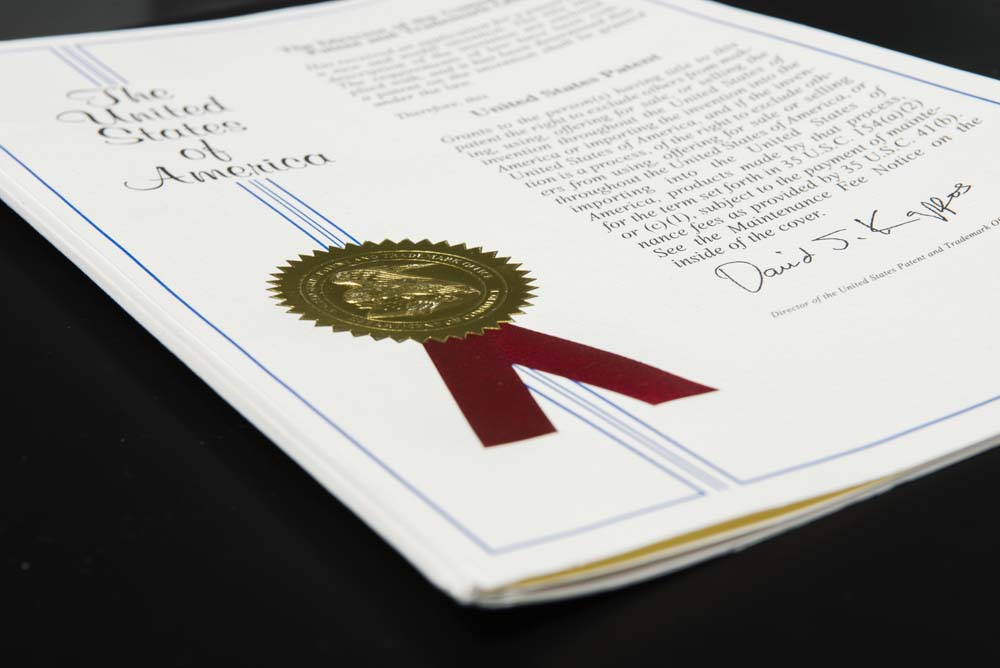
If successful, the USPTO will issue a patent grant, often referred to as the “ribbon copy.” This certificate formally gives you the right to exclude others from making, using, or selling your invention in the United States.
What Rights Does a Patent Provide?
An issued U.S. patent gives you exclusive rights to your invention within the country. These rights allow you to:
- Manufacture and sell your product without competition
- License your invention to others for profit
- Enforce your rights in court if someone infringes on your patent
Patents are considered intellectual property and can be sold or transferred like other forms of property. They can also provide a strong foundation for building a business or attracting investors.
Working With a Patent Law Firm in New Jersey
The patent process involves legal, technical, and strategic considerations. From searches to prosecution, having a dedicated patent team increases your chances of success. At Gearhart Law, we work with inventors and businesses throughout New Jersey to protect innovation and secure patent rights.
If you’re ready to move forward with your idea, contact Gearhart Law today to schedule a consultation and take the first step toward securing your patent.